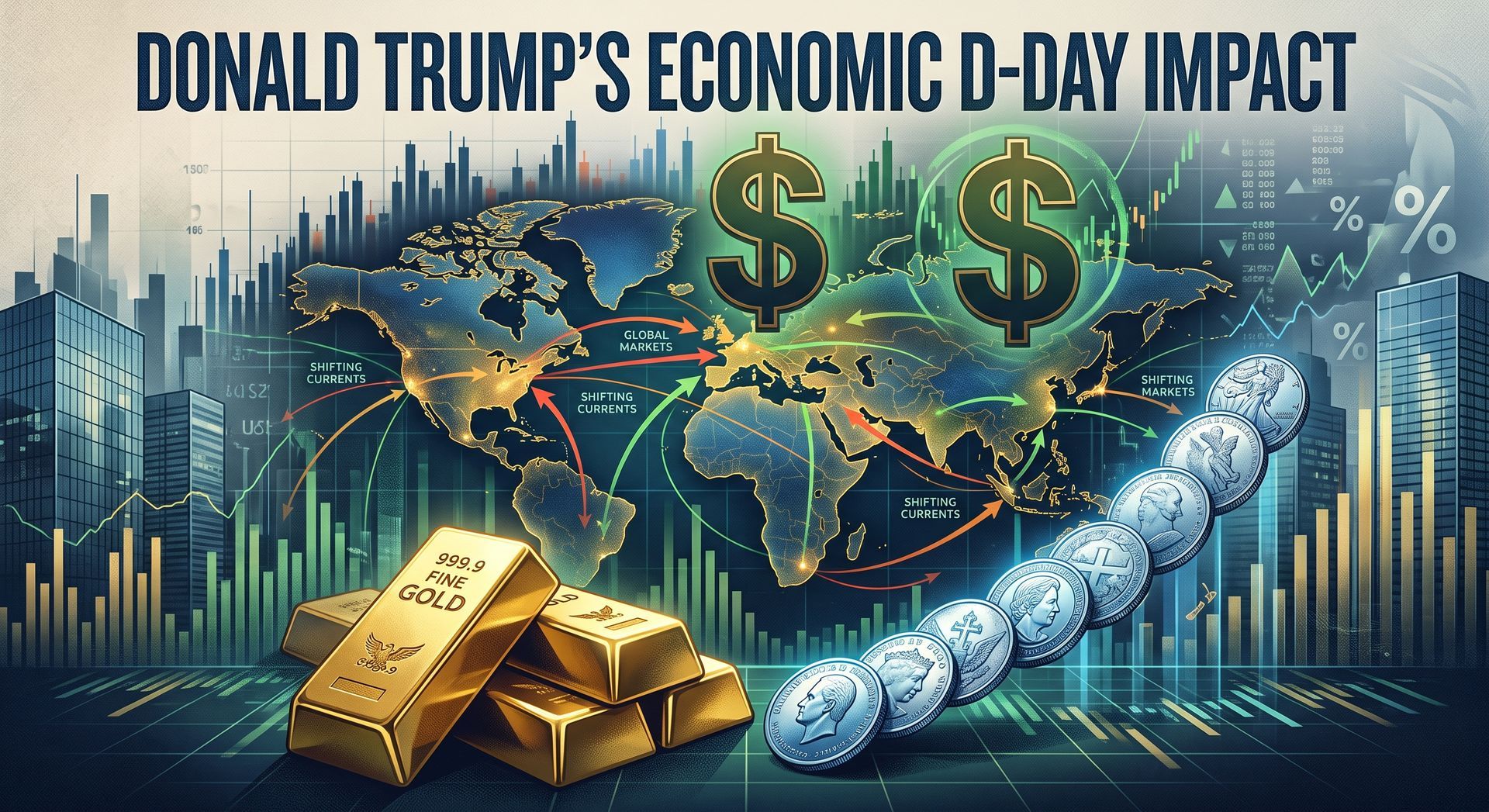
Donald Trump's Economic D-Day Impact
The announcement landed like a financial earthquake. When U.S. President Donald Trump and Treasury Secretary Scott Bessent unveiled "Economic D-Day" (officially designated Operation Economic Outcast), they did not just launch another round of foreign policy measures. They declared full-scale economic isolation against targeted regimes. They sent an unambiguous warning to any country, bank, or corporation doing business with them: cut ties immediately or face total exclusion from the U.S. dollar system.
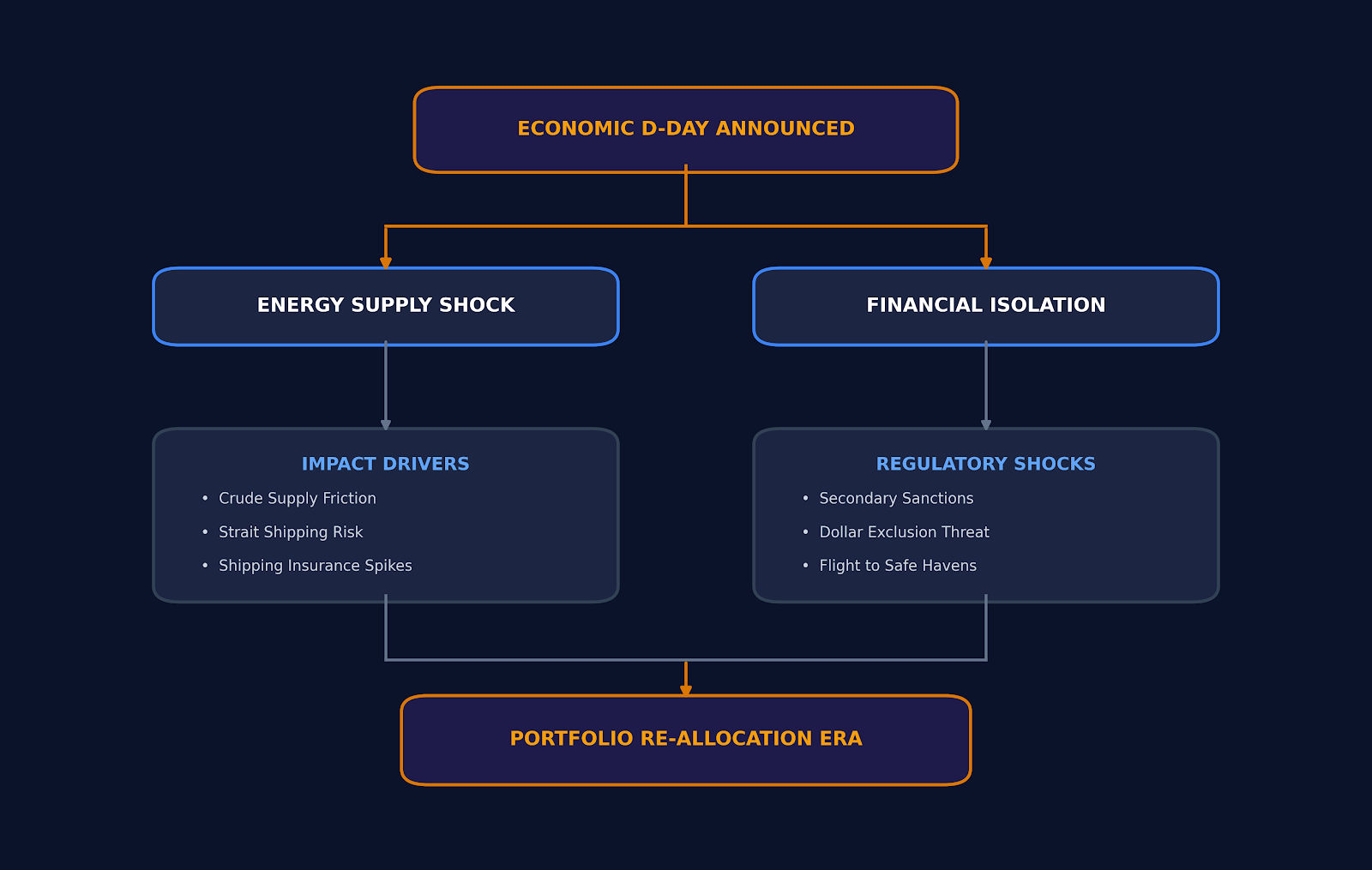
With the U.S. enforcing secondary sanctions alongside a naval blockade in the Strait of Hormuz, global financial markets are adjusting to a new reality. Energy supply chains are shifting, central banks are re-evaluating risk, and asset classes from equities to gold are moving rapidly.
For investors, the critical question is simple: Where do you allocate capital to protect your portfolio and capture upside over the next 12 months?
1. The Mechanics of Economic D-Day
Economic D-Day goes beyond traditional diplomatic pressure. It targets the primary channels of international trade evasion: digital assets, physical gold networks, aviation, shipping and front companies, and regional trade hubs.
The operation penalizes foreign exchange houses, shipping lines, and third-party buyers handling non-compliant commodities. By threatening to cut non-compliant foreign institutions off from SWIFT and U.S. clearing houses, the policy forces global trade participants into a clear choice: deal with the U.S. consumer market or trade with isolated regimes.

2. Impact Across Core Asset Classes
Global Stocks: High Volatility, Sector Breakdown
Broad indices are experiencing elevated volatility due to supply chain disruptions and energy market stress.
- Underperforming Sectors: Consumer discretionary, non-hedged transportation, and global manufacturing hubs reliant on unhedged raw inputs.
- Outperforming Sectors: Defense contractors, domestic U.S. energy producers, and critical technology providers.
The U.S. Dollar: Weaponization vs. Reserve Status
In the immediate term, demand for U.S. dollars rises as international institutions hoard cash liquidity to clear dollar-denominated contracts and navigate secondary sanctions. Over a multi-year horizon, however, aggressive secondary sanctions accelerate settlement of secondary trade in alternative currencies, reinforcing structural demand for real assets.
Gold and Silver: The Ultimate Safe-Haven Beneficiaries
Gold and silver continue to function as non-sovereign reserve assets. As central banks expand bullion holdings to insulate reserves against potential sanctions or asset freezes, precious metals gain structural tailwinds independent of traditional interest rate cycles.
Contact our investment team to tailor a bespoke investment portfolio to your growth and risk preferences.
3. Recommended Assets: 12-Month Target Allocations
To navigate this environment, Innovest Global Wealth recommends focusing capital on both growth and income investment options.
In fixed-income markets, achieving an annual coupon yield of 7.00% to 8.50% in USD requires focusing on hard-currency emerging-market sovereign debt and select high-grade corporate/financial paper from heavily regulated global institutions; for growth products, focus on cash-flowing defense majors, domestic energy producers, and physical precious metals.
To discuss customized investment strategies and tailored wealth management solutions, please reach out directly to
nelson@innovestglobalwealth.com or info@innovestglobalwealth.com.
4. Strategic Asset Allocation Models
Depending on your investment horizon and risk tolerance, Innovest Global Wealth recommends structuring your portfolio into one of two strategic allocation models to optimize returns during economic sanctions and trade realignments.
Model A: Defensive Capital Preservation Portfolio
Designed for high-net-worth investors seeking capital preservation, steady income and yield, and downside protection against global supply chain shocks.
5. Projected Portfolio Returns Over 12 Months
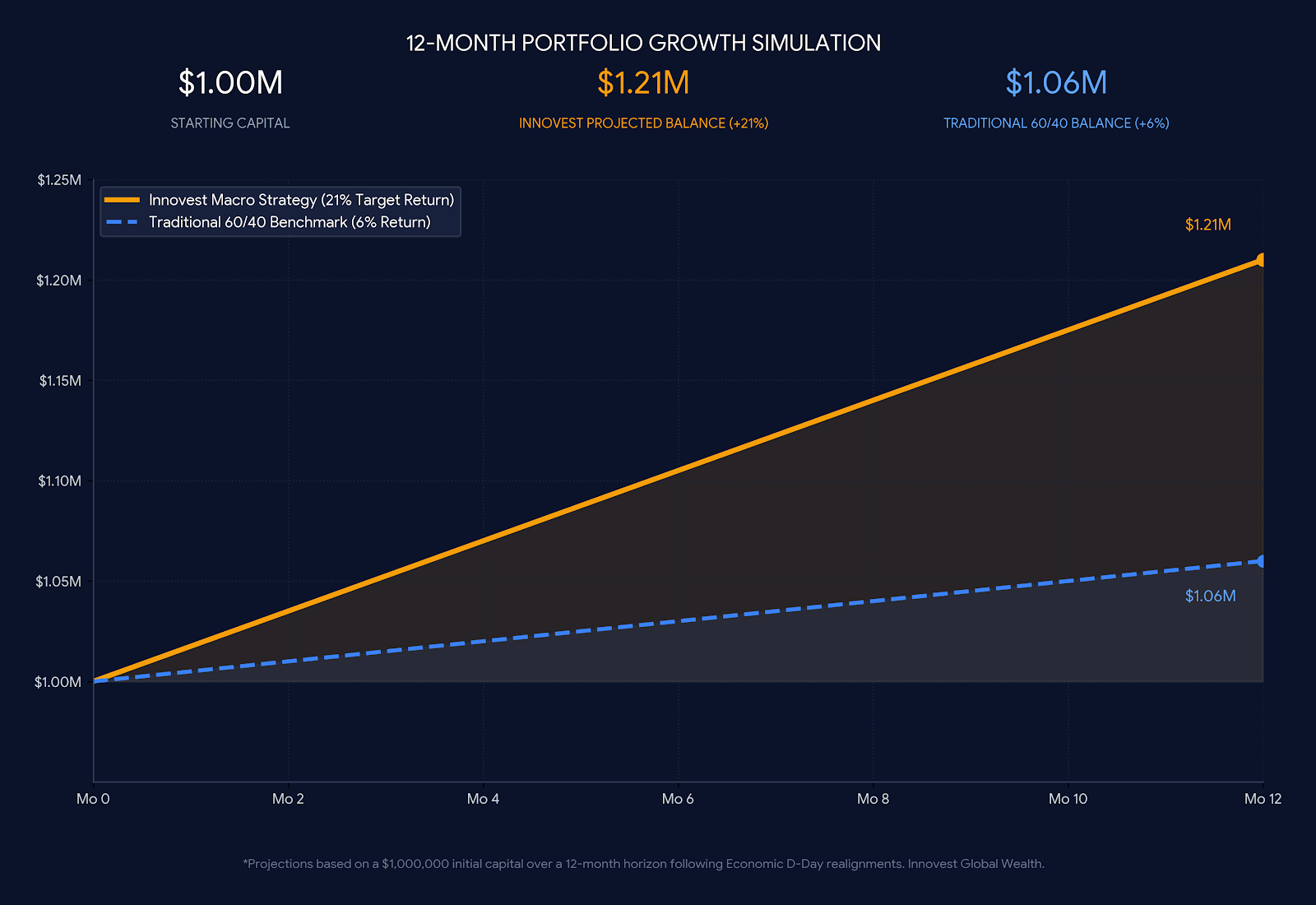
Below is a 12-month simulation comparing a standard $1,000,000 investment across three strategic approaches:
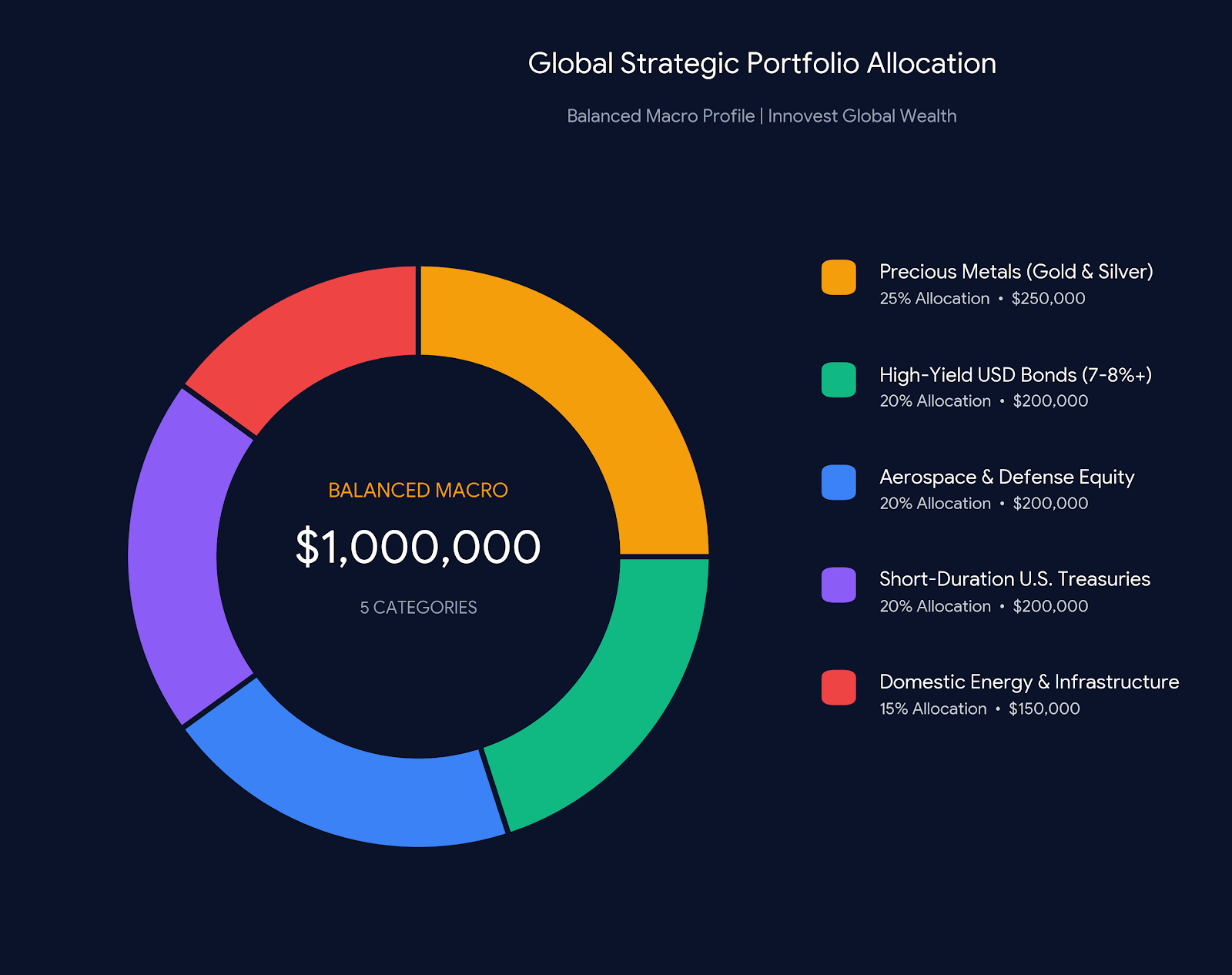
- Innovest Macro Position (Model A/B Hybrid): A multi-asset allocation combining physical precious metals (25%), high-yield USD bonds (20%), defense equities (20%), domestic energy majors (15%), and liquid short-duration U.S. Treasuries (20%).
- Traditional 60/40 Equity/Bond Portfolio: Standard global benchmark exposed to broad market equity volatility and low-yielding sovereign debt.
- Cash Reserves (U.S. Money Market): Risk-free cash yield vulnerable to inflation erosion and currency purchasing power shifts.
LET US BE YOUR INVESTMENT ADVISOR
Actionable Next Steps for Existing and Potential Investors
01
Audit Sanctions Exposure
Start reviewing your existing portfolio equities to ensure supply chains do not rely on high-risk maritime trade routes or institutions subject to secondary dollar sanctions.
02
Lock In 7%–8%+ USD Fixed-Income Yields
Reallocate excess cash reserves into regulated USD-denominated emerging sovereign and Tier-1 bank capital bonds to secure predictable quarterly income.
03
Increase Allocation to Non-Sovereign Assets:
Direct 15% to 25% of overall capital into physical gold bullion and silver to preserve purchasing power outside traditional banking channels.
04
Reallocate Capital into Defensive Yield:
Transition excess cash into domestic energy producers and defense contractors offering cash flows backed by long-term government demand.