
The IGW
Investment Business
Review
Investment News and Updates
Investment Review Articles

Donald Trump's Economic D-Day Impact

Best performing funds
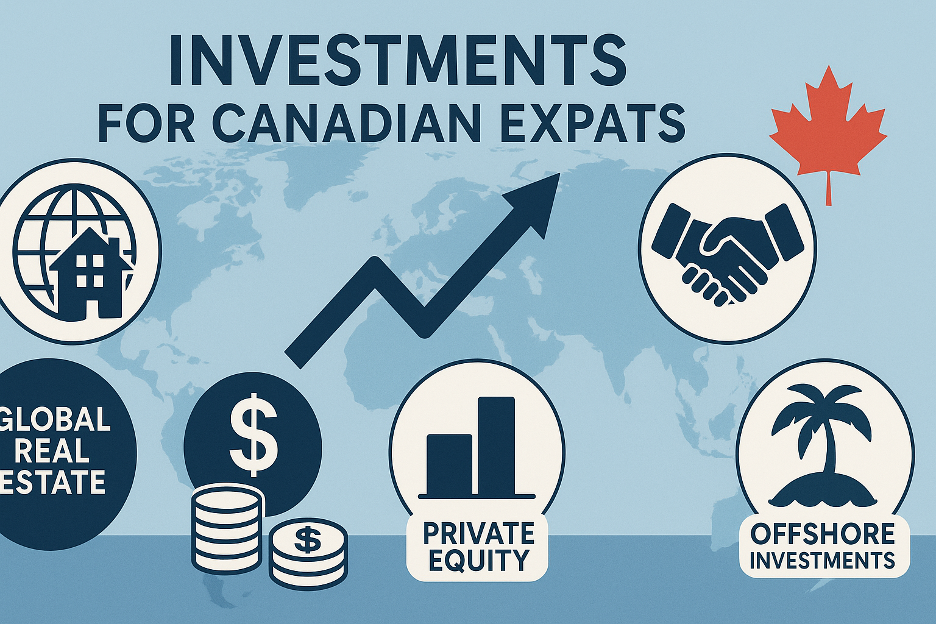
Best Investment Options for Canadian Expats

Sarwa investment review

Free Investment Advisory Sessions

CPF for Expats in Singapore: Central Provident Fund Guide.

ARDAN INTERNATIONAL REVIEW - IS ARDAN INTERNATIONAL LEGIT?

Investment options for UK expats, or British expats, depend on the right strategy considering your tax residency, long-term plans, and overall financial goals.
HSBC Expat positions itself as a premium provider of international banking and investment solutions for globally mobile expats or nomads. As part of the HSBC Group—a globally recognised brand with operations in over 60 countries—it certainly sounds like a safe and convenient choice for expatriates. This article is a guest post by author and expat financial wealth manager Adam Fayed from www.adamfayed.com , examining the pros and cons of the HSBC Expat proposition. Introduction As with many large, traditional financial institutions, the branding does not always reflect the reality. Despite the polished marketing and promises of "global access", expats may encounter high costs, subpar investment performance, and inadequate personalisation, particularly in comparison to newer, more agile financial platforms. While HSBC Expat offers functional banking services and global account access, it often falls short in areas that truly matter: cost efficiency, transparency, and investment flexibility. For globally conscious investors who prioritise long-term returns and excellent customer service, superior options are readily available on the market. In this review, we will explore what HSBC Expat offers—and where it falls short. Let us examine the pros, cons, and real-world implications for expatriates considering HSBC Expat for their banking and investment needs. Bottom Line: Is HSBC Expat Worth It for Expats? From a banking perspective, HSBC Expat is passable but hardly exceptional. It offers basic functionality, multi-currency accounts, and global money transfer tools. However, these benefits come with a lengthy list of caveats, including high minimum balance requirements, inconsistent customer service, and international transfer fees that are significantly pricier than those offered by fintech alternatives like Wise or Revolut. There's also the bureaucracy that comes with dealing with such a large, legacy institution. Many users report slow response times, a lack of proactivity from relationship managers, and a general sense of being just another number in HSBC's 40 million-strong customer base. But the real disappointment lies in the investment offerings. HSBC Expat promotes a variety of investment products—many of which are heavily concentrated in the expensive HSBC-branded funds. While packaged attractively, these funds often come with multiple hidden fees, entry charges of up to 3%, and annual management fees that eat into returns over time. It is particularly frustrating given that lower-cost, higher-performing alternatives are available through independent platforms and providers. HSBC Expat's so-called "diversified" portfolios often heavily rely on internal products, which can hinder proper diversification and independence. Some expats might assume that "you receive what you pay for" with a global bank; that assumption simply does not hold up in this case. Worse still, HSBC Expat's investment advice is not impartial. HSBC's advisors prioritise the promotion of the bank's own investment products, frequently disregarding the quality or suitability of these products to clients or investors due to their incentivisation. In contrast, fee-only advisors prescribe products based on their clients' requirements and needs, and they also provide a wide range of options from various asset managers, fund managers, and banks. Anyone taking a long-term approach to wealth building should be wary of this conflict of interest. HSBC Expat: A Familiar Name Does Not Equal Better Service Customers often cite the comfort of dealing with a well-known brand like HSBC, even when better options are available. However, this is a classic example of familiarity bias — the inclination to opt for what is familiar, even when it may not be the best choice. The mere fact that HSBC maintains branches in numerous countries does not guarantee seamless interconnection. In reality, there might be limited cooperation between HSBC branches in different countries. For example, you may not be able to deposit a cheque from HSBC Country A into your account in HSBC Country B—a serious issue for mobile individuals who expect international consistency. There's also the increased regulatory exposure that comes with banking at a global institution. HSBC has a long history of cooperating with regulators and, in some cases, has proactively shared information with tax authorities. This approach is not inherently wrong, but expats looking for more discreet or flexible financial arrangements should take note. Final Verdict: Look Beyond the Brand To summarise: HSBC Expat's banking services are functional but dated, often accompanied by higher fees, clunky processes, and impersonal service. Investment options through HSBC Expat are expensive, biased toward in-house products, and tend to underperform compared to more modern platforms. The global brand image masks systemic inefficiencies, especially when compared to independent providers or challenger banks that prioritise expat needs. There are better options available—both in banking and investing—that offer lower fees, better customer service, and more transparent, performance-driven products. HSBC Expat may work as a secondary account or for limited use, but for serious investors or globally mobile professionals looking to grow and protect their wealth, it's far from the best choice. As a general rule, avoid bundling your banking and investing with the same institution, especially when that institution is promoting its own branded funds. Independence, flexibility, and transparency should be your top priorities — and unfortunately, HSBC Expat does not score highly in any of those areas. Would you like this data adapted into a PDF report or a LinkedIn post version? We can also help tailor this to a specific audience (e.g., British expats, digital nomads, high-net-worth individuals, etc.) if you would like. For a second opinion, please contact Adam Fayed at +44 7393 450 837 via WhatsApp or hello@adamfayed.com via email. Or, you can contact us directly via email and WhatsApp at info@innovestglobalwealth.com and +256773488765, respectively. Note: This article is for informational purposes only and should not be considered financial, legal, or tax advice. Some facts may have changed since the publication date.

This article is mainly about Investors Trust S&P 500 investing and MSCI products. In this article, we will discuss: Who is the investors Trust company? Should l buy s&p500 investing? Advisors and introducers who want to distribute Investors Trust globally can also reach out to me. Firstly, who is Investors Trust S&P 500 Savings Plan? Investors Trust is a fast-growing investment provider based in Puerto Rico, Cayman Islands, Malaysia, and beyond. They also have administration offices in the UAE and Uruguay. Investors trust with in $4.1 billion in assets under management and clients in over a hundred countries, they are increasingly becoming a bigger player in the offshore investing landscape, having grown more than 45% per year during the pandemic. Most of the Investors trust clients are expats or locals in Latin American, Africa and Asia. The S&P500 investment product is more widely sold than the MSCI one, but the plans are very similar, as I will explain in this article. If you want to invest as an expat or high-net-worth individual, you can email me (nelson@innovestglobalwealth.com) What are the basics associated with S&P500 investing? The basic elements of the plans are below: The plans are available in USD only. With a minimum starting point of $200 a month, this option can be taken out over 10, 15, or 20 years. The 10-year option only has a 100% guarantee, meaning that you don’t have much downside protection. The 15 and 20-year accounts have 140% and 160% protection respectively, meaning that you can make some money, even if the market has fallen. There is a $10 a month fixed-charge alongside a 0.125% monthly fee applied on all terms. The admin fee is 2% for the 10-year account, 1.7% for the 15-year, and 1.1% for the 20-year. There are two index series options. The S&P500 and MSCI EAFE. The S&P500 is one of the major indexes in the United States, focusing on 500 of the leading firms, including Apple, Microsoft, etc. Over most 30-year periods, the S&P500 index has averaged about 10% per year, even if some periods are better. In comparison, MSCI EAFE is an index focusing on 21 developed market indexes, excluding the United States and Canada. This includes stock markets in Japan, the UK, Germany, and France. In the last decade, the MSCI EAFE index has underperformed the S&P500, but this won’t last forever. Below are the major firms in the S&P500 index: